Sydney is one of the most competitive markets in Australia. Rent, wages and advertising costs keep climbing, so every marketing dollar needs to earn its place. Yet many business owners spend on SEO, Google Ads and social media every month without being able to say what they are getting back.
The good news is that wasted spend usually leaves clues. Here are five warning signs your marketing budget is not working as hard as it should, and what you can do about each one. This is not about spending less. It is about spending where it actually produces enquiries and customers.
Sign 1: You can't say where your enquiries come from
Ask yourself a simple question: which channels brought in your last ten customers? If the honest answer is “I’m not sure”, you are guessing, and guessing is expensive.
Many Sydney businesses receive enquiries through phone calls, website forms, Google Maps listings and social media messages. Without proper tracking, it is nearly impossible to tell which of those came from your ads, your SEO or word of mouth. That means you cannot know what to scale up and what to cut.
What to do
- Set up conversion tracking in Google Analytics 4 and Google Ads for form submissions, calls and bookings.
- Use call tracking or a dedicated phone number for each major channel.
- Add a simple “How did you hear about us?” question to enquiry forms, and ask it on the phone too.
- Review the numbers monthly, not once a year.
Sign 2: Traffic is up, but enquiries are flat
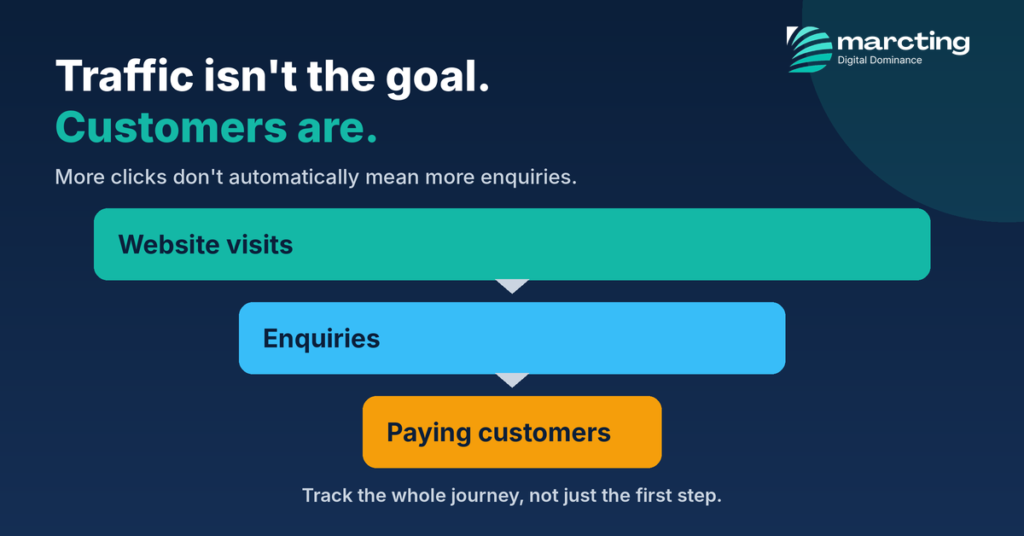
More website visits, more impressions, more followers. It all feels like progress, but none of it pays the bills. These are often called vanity metrics: easy to report on, but only loosely connected to revenue.
When traffic rises and enquiries do not, something between the click and the conversation is broken. You may be attracting the wrong audience, your offer may be unclear, or your website may be making it hard to get in touch.
What to do
- Judge your marketing on leads, cost per lead and customers won, not just clicks and reach.
- Check which pages and keywords actually produce enquiries, and put more effort there.
- Compare the quality of leads, not only the quantity.
Sign 3: Your ads are reaching people you can't serve
-
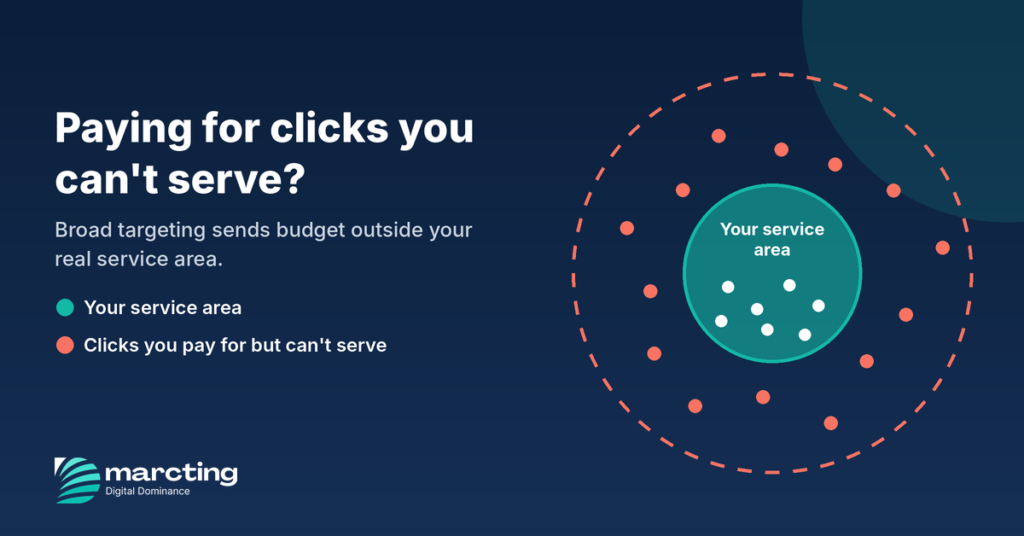
Greater Sydney covers a huge area. If you service the Inner West or the North Shore but your ads target “Sydney” as a whole, you may be paying for clicks from people who are too far away to ever become customers.
The same problem shows up in keyword targeting. Broad keyword settings can match searches like “free”, “jobs” or “DIY” that have nothing to do with buying from you. Every one of those clicks costs money.
What to do
- Limit location targeting to the suburbs you actually serve.
- Add negative keywords to block irrelevant searches.
- Check your Google Ads search terms report regularly and remove anything that wastes spend.
Not sure if your ads are leaking budget?
Sign 4: Your website isn't turning visitors into customers
Even the best SEO and advertising cannot fix a website that does not convert. If paid traffic lands on a slow, cluttered page with no clear next step, you are paying to send people somewhere they will leave.
Here is a quick test. Open your site on your phone, on mobile data. Can a stranger find your phone number or booking button within a few seconds? If not, your visitors probably cannot either.
What to do
- Send ad traffic to focused landing pages rather than your homepage.
- Make your main call to action obvious on every page.
- Improve page speed and mobile usability.
- Show trust signals such as customer reviews, case studies and your service area.
Sign 5: You get activity reports instead of results
Posts published, keywords ranked, impressions delivered. A report full of activity can look impressive while saying nothing about whether your business grew. Another warning sign is spreading a modest budget thinly across five or six channels, so none of them get enough investment to work.
If nobody can explain, in plain English, what the marketing plan is and how it ties to revenue, that is a red flag.
What to do
- Ask for a one-page report showing spend, leads, cost per lead and customers won.
- Put your budget behind one or two channels that are working before adding more.
- Make sure you own your Google Ads account, Google Analytics and website access, so you are never locked out of your own marketing.
How to stop the leak: a simple starting point
- List everything you spend on marketing each month and what each item is meant to achieve.
- Set up tracking so every enquiry can be traced back to a source.
- Give each channel a fair test period, then pause or fix what is not producing leads.
- Move budget towards the channels that bring in real customers, and review again next month.
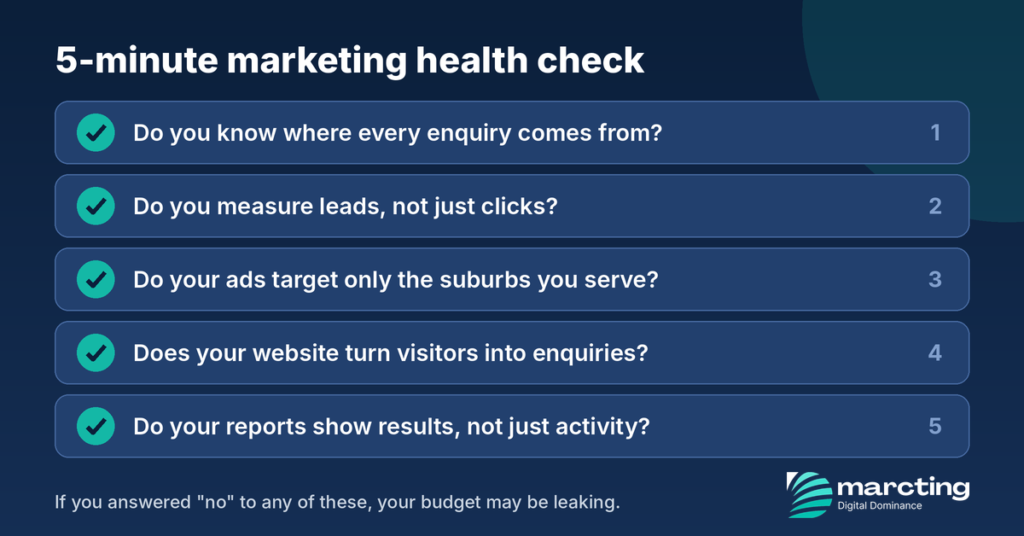
Run through this quick health check to see where you stand.
Frequently asked questions
-
1. How do I know if my marketing is actually working?Track leads and customers, not just traffic. If you can connect enquiries to specific channels and see what each lead costs, you can tell what is working. If you cannot, fixing your tracking is the first step.
-
1. How long does it take to see results from SEO and Google Ads?Google Ads can produce traffic quickly, but campaigns usually need testing and refinement before they become efficient. SEO tends to take several months to build momentum, depending on your competition and where you are starting from. Be cautious of anyone promising instant, guaranteed results.
-
1. How much should a small business in Sydney spend on marketing?There is no single right number. It depends on your goals, profit margins, competition and how you win customers. A better question is what return you need and whether you can measure it.
-
1. Should I start with SEO or Google Ads?It depends on your timeline and budget. Ads can bring faster enquiries, while SEO builds longer-term visibility. Many Sydney businesses use both, with ads covering short-term demand while SEO grows.
-
1. What should I look for in a marketing agency?Clear reporting tied to leads and revenue, a plan you can understand, and full ownership of your own accounts and data. Be wary of agencies that report mostly on activity or will not give you access to your accounts.
The bottom line
Wasted marketing spend rarely announces itself. It shows up as unclear tracking, flat enquiries, unfocused ads, a website that does not convert and reports that never answer the question that matters: is this making us money? Spotting these signs early lets you fix the leaks and put your budget to work.